
Ultrasound Scans Throughout Pregnancy: A Month-by-Month Guide
Pregnancy is an exciting yet crucial phase in a woman’s life, and ultrasound scans play an essential role in monitoring the development of both the baby and the mother. Below is a detailed breakdown of the key ultrasound scans during each trimester of pregnancy.
First 3 Months of Pregnancy: Early Pregnancy Checks
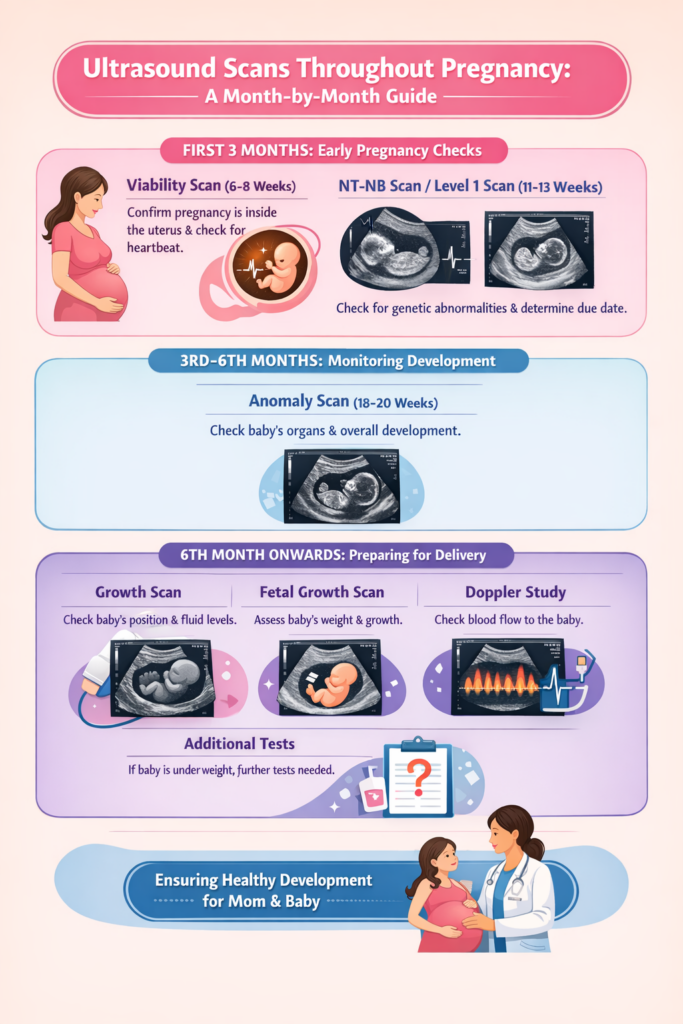
Viability Scan (Week 6-8):
This scan is performed early in the pregnancy to confirm the viability of the pregnancy. It checks if the pregnancy is located inside the uterus and helps detect whether the embryo has a heartbeat, which is a crucial indicator of a healthy pregnancy.
NT-NB Scan (Level 1 Scan) (Week 11-13):
This scan is performed between 11 and 13 weeks to assess the risk of any genetic anomalies, such as Down’s syndrome. It checks for specific markers, including the nuchal translucency (NT) and nasal bone (NB), which can indicate the risk of certain conditions.
This is also the scan where the most accurate due date for the pregnancy is determined based on fetal measurements.
3rd-6th Month of Pregnancy: Monitoring Development
Anomaly Scan (Week 18-20):
The anomaly scan, usually done between 18 and 20 weeks, provides a detailed look at the baby’s development. It checks for any physical abnormalities, ensuring the baby’s organs and body structures are developing normally.
This scan helps to detect structural abnormalities such as problems with the brain, heart, kidneys, limbs, and other vital organs.
6th Month Onwards: Preparing for Delivery
Growth Scan (Week 28 onwards):
This scan is performed in the final trimester to assess the baby’s position and readiness for delivery. It ensures the baby is in the right position for a normal vaginal delivery and checks the fluid levels around the baby.
Fetal Growth Monitoring (Week 30-32):
The scan tracks the baby’s growth by estimating its weight and checking if the baby is growing as expected. This is important to monitor whether the baby’s development is on track.
Blood Flow Assessment (Week 32-36):
A Doppler scan is performed to examine the blood flow from the mother’s blood vessels to the baby, ensuring that the placenta is functioning well and supplying adequate nutrients and oxygen to the baby.
Additional Tests (Week 36 onwards):
If the baby’s weight appears lower than expected for its age, further tests may be required to identify any underlying issues. These scans help monitor the health of the baby and ensure a good delivery outcome.
Why Are These Scans Important?
Ultrasound scans are non-invasive and provide real-time images of the baby’s development, helping doctors track growth, detect abnormalities early, and ensure the mother and baby are in optimal health throughout the pregnancy. Each scan serves a specific purpose and ensures that both the baby and the mother receive the best care.