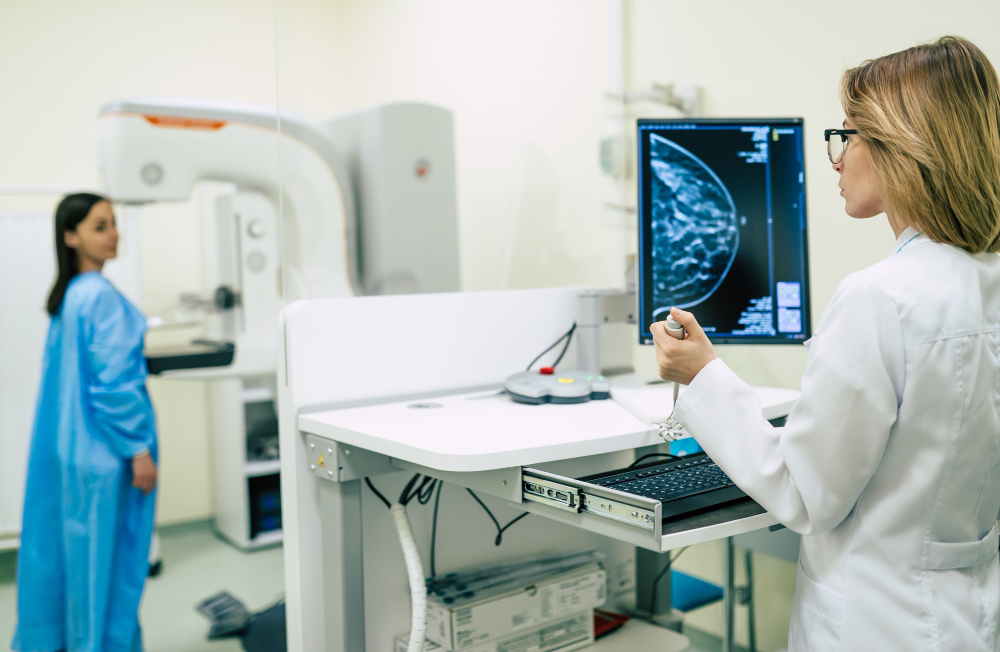
When it comes to breast imaging tests, many people wonder about the difference between mammography and sonomammography. Both tests help doctors look for changes in breast tissue. Mammography uses low-dose X-rays to create images of the breast. On the other hand, sonomammography, also called breast ultrasound, uses sound waves to make pictures. In this blog, we will explain Mammography vs Sonomammography, their uses, and how to choose the right test.
What is Mammography?
Mammography is a special X-ray test for the breasts. Doctors use it to find early signs of breast cancer. Usually, women over 40 get regular mammograms. The test takes only a few minutes. During the test, a machine presses the breast gently between two plates. This helps get clear images. According to the CDC, mammography is the most common screening tool for breast cancer.
What is Sonomammography?
Sonomammography is also known as breast ultrasound. Instead of X-rays, it uses sound waves to create images. A small device called a probe moves over the skin. The probe sends sound waves into the breast. These waves bounce back and form a picture on a screen. Sonomammography is safe and does not use radiation. Doctors often use it to look at lumps found during a physical exam or mammogram.
Key Differences Between Mammography and Sonomammography
Both tests help check breast health, but they work differently. Here are the main differences:
Technology: Mammography uses X-rays; sonomammography uses sound waves.
Radiation: Mammography involves a small amount of radiation. Sonomammography does not use radiation.
Best for: Mammography is better for finding tiny calcium spots (microcalcifications). Sonomammography is better for checking lumps or dense breast tissue.
Comfort: Mammography may cause mild discomfort due to breast compression. Sonomammography is usually painless.
Screening vs. Diagnosis: Mammography is often used for routine screening. Sonomammography is mostly used for further evaluation after a lump is found.
When is Each Test Recommended?
Doctors choose the right test based on your age, symptoms, and breast type. Here is when each test is usually recommended:
Mammography: Recommended for women over 40 as a routine screening test.
Sonomammography: Suggested for younger women, pregnant women, or those with dense breasts.
Also, sonomammography helps check lumps found during a mammogram or physical exam.
Sometimes, doctors use both tests together for a clearer picture.
Benefits and Limitations
Each test has its own strengths and weaknesses. Let’s look at them:
Mammography Benefits:
Detects early signs of breast cancer
Finds tiny calcium deposits
Useful for routine screening
Mammography Limitations:
Less effective in dense breasts
Uses a small amount of radiation
May cause mild discomfort
Sonomammography Benefits:
No radiation exposure
Better for dense breast tissue
Painless and quick
Sonomammography Limitations:
Cannot detect microcalcifications
Not used for routine screening
Results may depend on the skill of the technician
How to Prepare for Each Test
Preparation for both tests is simple. Here are some tips:
Wear a two-piece outfit for easy undressing.
Do not use deodorant, powder, or lotion on your chest or underarms before a mammogram. These can show up on the X-ray.
For sonomammography, no special preparation is needed. However, you may be asked to remove jewelry or clothing from the upper body.
Arrive a few minutes early to fill out any forms.
Frequently Asked Questions
Which breast scan is better? It depends on your age, breast type, and reason for the test. Mammography is best for routine screening. Sonomammography is better for dense breasts or checking lumps.
Is sonomammography safe? Yes, it is safe and does not use radiation.
Can I have both tests? Yes, sometimes doctors use both tests for a complete view.
Does mammography hurt? It may cause mild discomfort, but it lasts only a few seconds.
How often should I get a mammogram? The CDC suggests women over 40 get a mammogram every 1-2 years. Talk to your doctor for advice.
In summary, both mammography and sonomammography are important breast imaging tests. Each has its own role in finding and checking breast problems. Consult a radiologist or healthcare provider at Sri Balaji Diagnostics to determine the best breast imaging test for your needs.