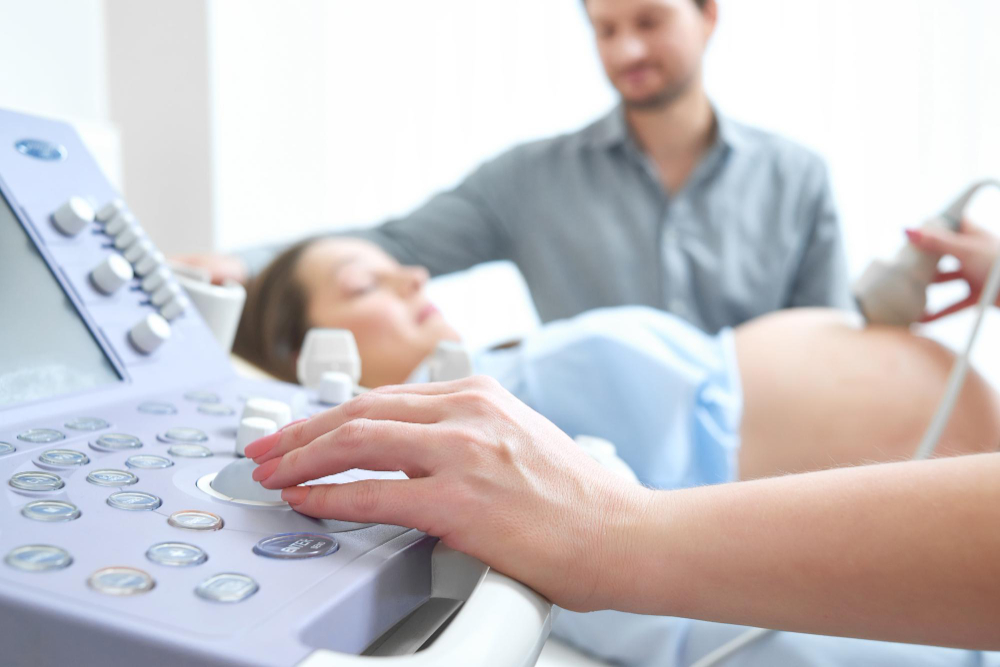
Expecting twins is exciting, but it also means extra care. A twin pregnancy scan is an important tool for keeping both babies healthy. These scans help doctors watch for special conditions like TTTS (Twin-to-Twin Transfusion Syndrome) and monitor MCDA (Monochorionic Diamniotic) twin pregnancies. With regular twin pregnancy ultrasounds, doctors can spot problems early. This helps ensure the best care for you and your babies.
What is a Twin Pregnancy Scan?
A twin pregnancy scan is an ultrasound made for mothers expecting twins. Unlike a standard pregnancy scan, it checks both babies closely. It looks at their growth, heartbeats, and how they share space in the womb. Because twins may share a placenta or amniotic sac, these scans are more detailed. As a result, doctors can find issues early and plan the right care.
Understanding TTTS (Twin-to-Twin Transfusion Syndrome)
TTTS stands for Twin-to-Twin Transfusion Syndrome. It happens when twins share a placenta and blood flows unevenly between them. One baby may get too much blood, while the other gets too little. This can cause health problems for both twins. Early detection is key, because TTTS can get worse quickly. Common warning signs include:
If you notice these symptoms, tell your doctor right away. Quick action can make a big difference.
What is MCDA Monitoring?
MCDA stands for Monochorionic Diamniotic. In MCDA twin pregnancies, both babies share one placenta but have separate amniotic sacs. This type of twin pregnancy needs close monitoring. Because the twins share a placenta, they have a higher risk for TTTS and other problems. Regular MCDA monitoring helps doctors check for these risks. It usually involves more frequent ultrasounds and careful tracking of each baby’s growth and fluid levels.
Diagnosis and Monitoring Process
Doctors use ultrasound to diagnose TTTS and monitor MCDA pregnancies. During each scan, they check:
Usually, scans are done every two weeks for MCDA twins. If doctors see any warning signs, they may schedule more scans. This close watch helps catch problems early, so treatment can start right away.
Treatment Options and Next Steps
If TTTS or other issues are found, several treatments are available. Options may include:
Early intervention is very important. The sooner doctors act, the better the outcome for both babies. Always follow your doctor’s advice and attend all scheduled scans.
Tips for Expectant Parents
Staying informed and prepared can help you feel more confident. Here are some helpful tips:
Prevention and Early Detection
Regular twin pregnancy scans are the best way to prevent serious problems. Early detection allows doctors to act fast. This can lower the risk of complications for both babies. Timely medical care and following your doctor’s advice are key to a healthy pregnancy.
Reliable Resources
For more information, trust sources like the World Health Organization (WHO), the Centers for Disease Control and Prevention (CDC), and peer-reviewed medical journals. These offer up-to-date, accurate advice on twin pregnancy scans, TTTS, and MCDA monitoring.
Conclusion
Twin pregnancy scans are vital for spotting and managing TTTS and MCDA risks. Consult your healthcare provider or a radiology specialist at Sri Balaji Diagnostics for personalized guidance on twin pregnancy scans and monitoring.